
India – A future semi-conductor mega hub?
The discussion about semiconductor shortage in the whole world is not new. It is true that most of the supply chains are disrupted due to

“We must all suffer from one of two pains: the pain of discipline or the pain of regret. The difference is discipline weighs ounces while regret weighs tons.”
Jim Rohn
Yes, if I have to name one quality which definitely guarantees success, it would be Discipline. Self-control in a wider sense breeds discipline.
So what is this self-control? Psychology Today (Magazine) describes it as “The ability to subdue our impulses in order to achieve longer-term goals.” In other words, discipline now or regret later.
Success in its true sense doesn’t only mean monetary, it is believed to be a sum total of all aspects of life or a wholesome life in itself. Financial success, even though not the most important, has a significant impact on one’s life. Money somehow leads humans to make irrational decisions and lose self-control more often than anything.
Why our judgment gets cloudy in money matters?
Let’s analyze.
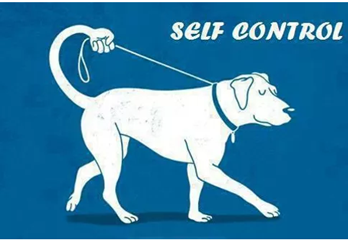
Self-control has been a topic of debate and discussion among psychologists for a very long time and more so in these past few decades.
So why is self-control important?
Walter Mischel, also referred to as ‘marshmallow man’, conducted an experiment, 50 years ago, about preschoolers’ ability to delay gratification. He hypothesized that this experiment will enable him to predict whether the pre-schoolers’, in the future, will be successful or unsuccessful. His study revealed that the children who did not take the marshmallows had greater success as adults compared to the children who took the marshmallows. However, one shortcoming to Mischel’s theory is that he assumed that self-control can only be taught when a person is still very young.
Various researchers such as the American Psychology Association’s, Veronika Jobs, and Mickelson, found that self-control can be taught at any age. Furthermore, self-control is important because study after study has associated self-control to achievement.
Two of the most ancient Indian religions, Buddhism and Jainism, which began almost simultaneously between 6th and 4th century B.C., equally lay importance to self-control as a way to attain enlightenment.
Buddhism emphasized realization of the fact that nothing surpasses the love of oneself. With such assumption, Buddhism says that one should examine, control and judge one’s own self before anything else and any action which is for one’s own benefit should be carried out instantly. Since each one is living in the midst of emotional and social turmoil.
Hinduism further advocates the idea of self-control in the form of “Brahmacharya”, which means self-abstinence. This extends to the virtue of celibacy when unmarried and fidelity when married.
No wonder how ancient Indians developed unparalleled wisdom of their time, it was through sheer self-control.
But in this modern technological, free home delivery and capitalistic world, which revolves around money, developing and maintaining self-control is a challenging task. Social media has made people so desperate for validation that people go to extreme limits for that short term dopamine hit.
Relationships (business or otherwise), friendships, family values, all have become very hard to maintain, because of the severe lack of self-control. This takes a toll on not only our mental and physiological health but financial health as well. This is where marketing and advertising creeps in, this is where we are pushed towards the root cause of all evil, “Consumerism”.
"Advertising sells you things you don't need and can't afford, that are overpriced and don't work."
George Carlin
Binge shopping is no more an abnormality; it has become a way of life. Canada alone has spent a whopping $19 Billion on online purchases in 2016.
These are massive numbers, which are higher than the GDP of many countries, not to mention the offline or traditional retail shopping figures are not included, along with the country’s foreign imports, purchase of capital goods and acquisition of assets. Some predict that this number may reach $39 billion by 2019.
So now you might be wondering that am I proposing a boring, monotonous, miserable life with no comforts or social circle?
Absolutely not, what I am propagating is “BALANCE”.
Excess of everything is bad. The 1st step towards self-improvement is self-actualization.
In the matter of wealth creation, when Warren Buffett was asked for the single most powerful factor behind his investing success, he responded “compound interest” — without skipping a beat. Mr Buffett, one of the richest men in the world, terms compound interest as the 8th wonder of the world. He has been investing for over 80 years now, his strategy is “Invest right and sit tight”. This is an exemplary display of massive self-control.
People, who are working with money to make more money, need to have iron discipline and nerves of steel. So if they can develop such superior self-control which has made fortunes for them, why can’t commoners like you and me?
This leads to the next basic question of ‘HOW’?
Well, Christian Mickelson, a renowned business coach, and professional working with institutes such as the (APA), stated that similar to a muscle, self-control and willpower can be strengthened overtime. Consequently, the response to the inquisition of “can we actually have it all” is yes. Many researchers, psychologists, philosophers have termed this as a snowball effect, you have to begin and be consistent, the results will compound.
It is only fair to mention that some people have had this gift since birth. There is no concrete evidence which traces self-control to the genes, due to lack of research in this field, but a study known as, Gottfredson and Hirschi’s theory contained two propositions that have been the source of many discussions and observations.
Some basic advice like, “first save then invest”, “think about future”, “plan your retirement in your 20s” etc., may be optimistic sounding but very vague and not pragmatic in most cases. Some independent studies done over the past few years, involving a few high net-worth individuals, gives us some basic “How to develop self-control” guidelines, which may work for people who want to take a step in the right direction.
Firstly, “READ READ READ”– It’s no secret that reading develops a holistic thinking approach and is the best way to gain knowledge. But apart from these obvious benefits, reading also improves concentration and focus. Reading the right self-help books, forces the reader to critically think about the need for self-control and how it is a good quality to have, for the future. The basic problem with the human mind is the in-ability to identify its mistakes; thus, reading kills ignorance and creates space for other good qualities along with self-control.
Secondly, “RUN”– A fit mind resides in a fit body. I have never seen a person who runs and his/her life is not in order. Why is it so? Running develops a habit of pushing oneself to the limits. Who thought a simple action of putting one step in front of the other can take you places, literally. Apart from the physiological benefits, running improves the brain and body coordination, it develops a will power to overcome the physical fatigue by controlling the mind. Life is a marathon in itself; all these benefits can be appropriately manifested in this run as well. Running is not as tiresome as it sounds after all, have you heard about the ‘Runner’s High’?
Lastly, “Take Action” – Now when we have established that self-control is highly recommended but difficult to attain, the earlier you begin the better. In the case of sustainable wealth, you can begin by creating multiple sources of income, saving the right amount and investing at the right place. To cut down uncontrolled expenditure, economical psychologists Oaten and Chang suggest using cash instead of credit cards, this decreases overspending by almost half. This is because you are more accountable to how much you spend, contrary to using only a credit card. Another study claims that shopping on an empty stomach makes you buy more impulsively. I can rectify this based on my personal experience.
Simple steps like these work wonders in the long run and lead to overall success and a content life.
To sum up, it is well established that self-control is beneficial on multiple levels and is always good to have some, but in the case of truffle chocolate stuffed choco burst cake, you can excuse yourself.
Experiments like the marshmallow man did may prove to be inconclusive, misleading, incomplete and biased, involving a case of sheer luck. For example, all the subjects were of the same country, having the same racial background, have more or less the same schooling, family culture, career opportunities etc. makes the study not very ideal to be considered a fact. In fact all the studies on the matter of self-control are not very accurate because the results vary for every person and makes this a very subjective matter.
A child of a billionaire might sail through life very easily without having an ounce of self-control but the case may not be the same for you and me.
So start taking action today, go to the gym you always wanted to, trick your brain into reading more, running more, stop self-harming habits and set yourself on the path of a successful life.
“In reading the lives of great men, I found that the first victory they won was over themselves... self-discipline with all of them came first.”
Harry S Truman
Originally written by Gurshan in March 2017
Altman, A. (2014, October 14). Can you learn self-control? OP-Talks. https://op-talk.blogs.nytimes.com/2014/10/14/can-you-learn-self-control/
American Psychological Association. (2016). Self-control: Self-control and willpower. American Psychological Association. https://www.apa.org/topics/personality/self-control
DeSteno, D. (2017, December 29). The only way to keep your resolutions. The New York Times. https://www.nytimes.com/2017/12/29/opinion/sunday/the-only-way-to-keep-your-resolutions.html
Druckerman, P. (2014, September 14). Learning how to exert self-control. The New York Times. https://www.nytimes.com/2014/09/14/opinion/sunday/learning-self-control.html
Job, V., Walton, G. M., Bernecker, K., & Dweck, C. S. (2015). Implicit theories about willpower predict self-regulation and grades in everyday life. Journal of Personality and Social Psychology, 108(4), 637–653. https://doi.org/10.1037/pspp0000014
Mickelson, C. (2018). Optimizing your environment. Christian Mickelsen. https://christianmickelsen.com/optimizingyourenvironment
Oaten, M., & Cheng, K. (2007). Improvements in self-control from financial monitoring. Journal of Economic Psychology, 28(4), 487–501. https://doi.org/10.1016/j.joep.2006.11.003
Goodreads. (n.d.). We must all suffer from one of two pains… [Quote]. Goodreads. Retrieved from https://www.goodreads.com/quotes/209560-we-must-all-suffer-from-one-of-two-pains-the
The Art of Living. (n.d.). The true meaning of Brahmacharya. The Art of Living. Retrieved from https://www.artofliving.org/in-en/yoga/patanjali-yogasutra/true-meaning-brahmacharya
Monthly Interaction. (n.d.). Consumerism: The root cause of all evil. Monthly Interaction. Retrieved from http://www.monthlyinteraction.com/consumerism-the-root-cause-of-all-evil/
ING Newsroom. (n.d.). Four things Richard Thaler taught us about irrational behaviour. ING. Retrieved from https://www.ing.com/Newsroom/All-news/Four-things-Richard-Thaler-taught-us-about-irrational-behaviour.htm
Opstart. (n.d.). 13 stats & facts about online shopping in Canada. Opstart. Retrieved from https://www.opstart.ca/13-stats-facts-online-shopping-canada/
Forbes. (n.d.). Warren Buffett profile. Forbes. Retrieved from https://www.forbes.com/profile/warren-buffett/
Baumeister, R. F., & Vohs, K. D. (2006). Self-regulation and the executive function of the self. Handbook of Self and Identity, 197–217. Retrieved from https://www.tandfonline.com/doi/abs/10.1207/s15324834basp2801_1
BrainyQuote. (n.d.). Victory quotes. BrainyQuote. Retrieved from https://www.brainyquote.com/topics/victory
The discussion about semiconductor shortage in the whole world is not new. It is true that most of the supply chains are disrupted due to

It is over for shady and lazy HR practices. They have exploited the candidates for too long, now NO MORE! Starting January 1, 2026, Ontario
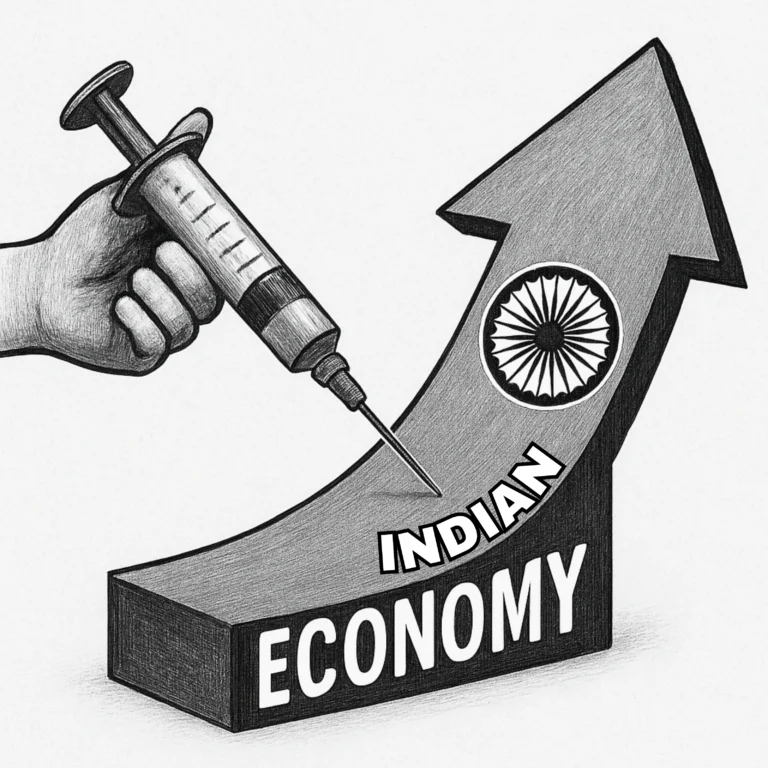
The memory feels just like yesterday when we saw hordes of men, women, and young children walk the streets of the national capital barefoot, with