Ontario’s Hiring Revolution 2026
It is over for shady and lazy HR practices. They have exploited the candidates for too long, now NO MORE! Starting January 1, 2026, Ontario

The discussion about semiconductor shortage in the whole world is not new. It is true that most of the supply chains are disrupted due to Covid, but geo-political tensions have added to the misery. Now with the Russia-Ukraine conflict, the shortage resolution is pushed further down the dark alley.
So let me put it as simply as possible. A semiconductor is a small electronic device(s) and there are many parts to it, but the most significant is the chip a.k.a an integrated circuit or IC. This chip contains transistors that help computations through a calibrated flow of electric current, and almost all modern devices have them.
If you are reading on a mobile or laptop then it has an IC, and if you are old school and are reading on printed page, then your printer too has an IC.
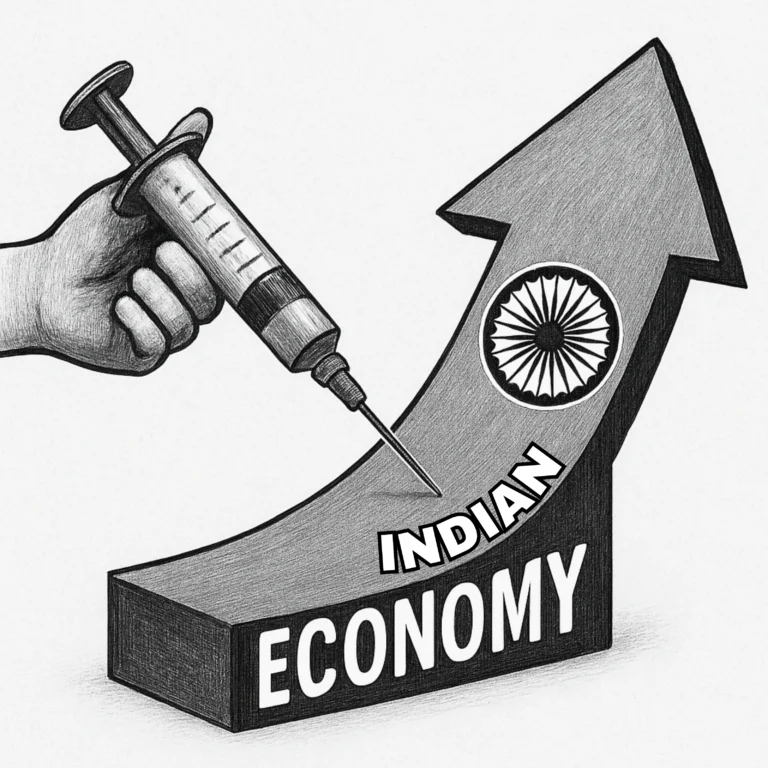
With the ever-increasing demand for electronic devices, India has been trying to break into the semiconductor manufacturing market, dominated by the USA ( with 50% of global market share, worth $208 billion in 2020), Europe, Taiwan, Korea and China. Previous attempts of the Government to attract foreign manufacturers or to establish home grown ones, have failed and India still fulfills 100% of its demand through imports.
The Indian smartphone manufacturing capacities have quadrupled over the decade and so has it’s appetite for the export of electronic goods. Depending on imports for Semiconductors is a big NO NO!!
As per the government, the Indian semiconductor market was estimated around $15 billion in 2020 and is expected to grow to around $63 billion by 2026. In December 2021, the Indian government cleared a Program for the Development of Semiconductors and Display Manufacturing Ecosystem in India. The $30 Billion plan (out of which $10 billion is production-linked incentive scheme) has an outlay for supply chains, electronics manufacturing, and support for allied sectors, with the aim to build up robust semiconductor manufacturing from grassroots.
The specifics and quantum of investment by the government is yet to be decided but it has declared that a Pari-passu model will be followed.
Undoubtedly, the market is huge and with such billions involved, the government from January 1, 2022 invited industry players for setting up semiconductor fabs (fabrication plants). As per the recent reports, the government has received five proposals worth Rs 1.53 lakh crore.
Apart from the Indian company Vedanta in a joint venture with Foxconn, Next Orbit Ventures and IGSS Ventures, were the other two companies that submitted applications for semiconductor plants. World’s largest chipmaker TSMC of Taiwan, Intel and Tata also have shown some interest in the venture.
The demand for Semiconductors is huge and with the current scenario in Europe, it is the right opportunity for India to address this market. Some might argue that India is late to the party but with this renewed interest from the government and billions on the table for the private players, we can safely assume that Party abhi baaki hai.
Apart from sophisticated raw materials, uninterrupted power and ultra clean water, semiconductor manufacturing also requires highly skilled labor, and a successful combination of all, might become a gruesome challenge for India. Furthermore, the notoriety of Indian bureaucracy, red tapes and capricious tax regulatory regime have yet to stand the test of time.
The setting up of plants, while having the central govt as a partner offering incentives is the sweetest deal anyone could get. The excitement is seen from the southern states and the estimated generation of 135000 jobs is a mouthwatering proposition for any state government.
India is destined to become a manufacturing powerhouse and therefore the lingering question is not of ‘How’ but of ‘When’.
This is a researched article from publicly available data. There could be factual inaccuracies.
Originally written by Gurshan in April 2022
It is over for shady and lazy HR practices. They have exploited the candidates for too long, now NO MORE! Starting January 1, 2026, Ontario
The memory feels just like yesterday when we saw hordes of men, women, and young children walk the streets of the national capital barefoot, with
“We must all suffer from one of two pains: the pain of discipline or the pain of regret. The difference is discipline weighs ounces while